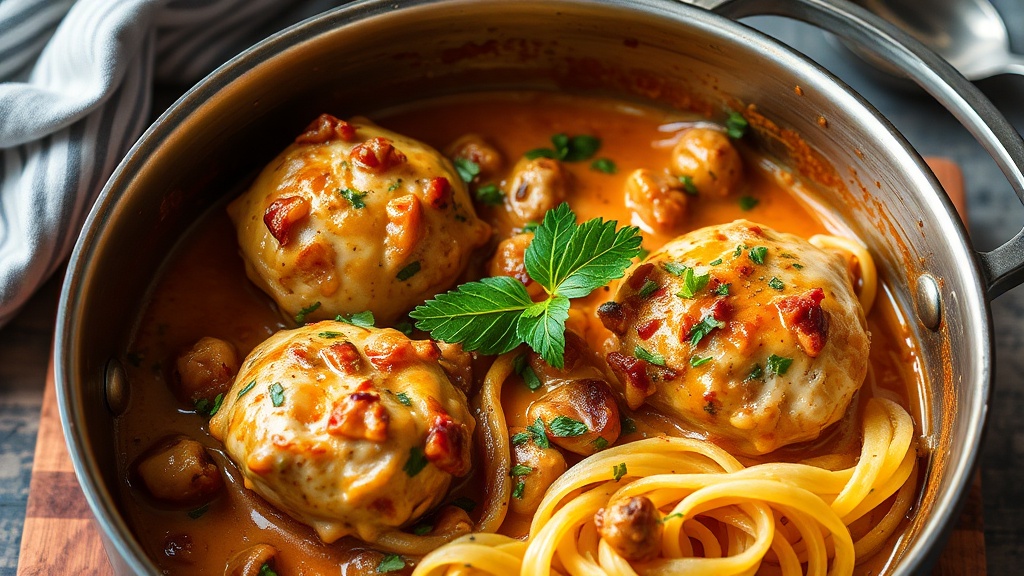
Creamy Tuscan Chicken: A 30-Minute One-Pot Wonder

What Makes Creamy Tuscan Chicken Worth Your Time?
This post covers everything needed to prepare Creamy Tuscan Chicken—a restaurant-quality dish that comes together in thirty minutes using a single pot. The recipe delivers tender chicken breasts simmered in a rich garlic-Parmesan sauce with sun-dried tomatoes and spinach. For busy home cooks seeking maximum flavor with minimal cleanup, this Italian-inspired meal checks every box without demanding hours in the kitchen.
The beauty here lies in simplicity. (And let's be honest—who wants to wash three pans on a Tuesday?) The sauce builds depth through layered techniques rather than complicated ingredients. Each element serves a purpose. The sun-dried tomatoes add concentrated sweetness. The spinach brings color and nutrition. The cream—well, that's what transforms ordinary chicken into something worth writing home about.
What Ingredients Do You Actually Need?
Four boneless, skinless chicken breasts (about six ounces each), salt, black pepper, olive oil, butter, garlic, chicken broth, heavy cream, grated Parmesan cheese, sun-dried tomatoes, fresh spinach, dried Italian herbs, and red pepper flakes.
Quality matters. For the chicken, Bell & Evans or Springer Mountain Farms offer reliable, humanely raised options found at most grocery stores. The sun-dried tomatoes should come packed in oil—dry-packed versions won't soften properly during the brief cooking time. Mediterranean Foods and Bella Stella both produce excellent oil-packed varieties with balanced acidity.
The Parmesan question deserves attention. Pre-grated cheese in green cans contains anti-caking agents that prevent smooth melting. Buy a wedge of Parmigiano-Reggiano and grate it fresh. The difference in sauce texture justifies the extra three minutes of effort. (Your taste buds will thank you later.)
For the cream, heavy whipping cream with at least 36% milk fat creates the silkiest sauce. Half-and-half works in a pinch but requires longer reduction time and risks breaking if overheated. Stick with heavy cream for consistent results.
Equipment That Helps
A 12-inch stainless steel skillet or enameled Dutch oven serves as the workhorse here. The Le Creuset Signature Enameled Cast Iron Dutch Oven distributes heat evenly and transitions beautifully from stovetop to oven if desired. For those preferring nonstick, the All-Clad HA1 Hard Anodized line offers excellent heat retention without the sticking concerns.
You'll also need tongs for turning the chicken, a wooden spoon for scraping fond (those browned bits equal flavor), and a microplane grater for the Parmesan. A simple instant-read thermometer—like the ThermoWorks ThermoPop—ensures perfectly cooked chicken without guesswork.
How Do You Build the Sauce Without Curdling?
Temper the cream by adding it gradually to the hot pan after reducing the chicken broth, and never boil the sauce once dairy joins the party.
The technique unfolds in stages. Start by patting the chicken dry—moisture prevents browning. Season generously with salt and pepper. Heat olive oil in your skillet over medium-high until shimmering. Add the chicken and resist the urge to move it. Let it sear undisturbed for five to six minutes per side until golden. Remove to a plate.
Now comes the magic. Melt butter in the same pan. Add minced garlic and sauté for thirty seconds until fragrant. Pour in chicken broth and scrape every browned bit from the bottom—this deglazing step extracts maximum flavor. Let the broth bubble and reduce by half, about three minutes. Here's the thing: patience at this stage pays dividends. The more you reduce, the more concentrated the flavor.
Lower the heat to medium-low. Pour in the heavy cream slowly while stirring constantly. Add the Parmesan and stir until melted. Toss in the sun-dried tomatoes, Italian herbs, and red pepper flakes. The sauce should coat the back of a spoon—if it's too thin, simmer gently for another minute or two.
Return the chicken to the pan, nestling it into the sauce. Simmer for five minutes until the chicken reaches 165°F internally. Add spinach in batches, stirring until wilted. That's it. Dinner is served.
What Should You Serve Alongside?
This creamy, rich dish demands accompaniments that cut through the richness—think pasta, crusty bread, or roasted vegetables.
Pasta remains the classic choice. Egg pappardelle or wide fettuccine catch the sauce beautifully. De Cecco and Barilla both produce excellent dried options, though fresh pasta from a local Italian market elevates the experience further. Cook the pasta in well-salted water (it should taste like the sea) and reserve a cup of pasta water before draining. The starchy liquid thins the sauce perfectly if needed.
For bread lovers, a crusty baguette or sourdough loaf does double duty—appetizer vehicle and sauce-sopper. Tall Grass Bakery in Seattle ships nationwide and produces an exceptional country sourdough with the chewiness this dish demands.
Vegetable sides provide necessary balance. Roasted broccoli with lemon zest, sautéed green beans with almonds, or a simple arugula salad with shaved Parmesan all work wonderfully. The key is brightness—something acidic or bitter to contrast the creamy sauce.
| Side Dish | Best For | Prep Time | Pairing Notes |
|---|---|---|---|
| Egg Pappardelle | Carb lovers, feeding crowds | 12 minutes | Catches sauce; add pasta water if too thick |
| Crusty Sourdough | Quick meals, casual dining | 5 minutes (to warm) | Perfect for scraping the plate clean |
| Roasted Broccoli | Low-carb diets, nutrition focus | 20 minutes | Add lemon zest after roasting for brightness |
| Arugula Salad | Light accompaniment | 5 minutes | Peppery greens cut through richness |
| Cauliflower Mash | Keto/paleo diets | 15 minutes | Creamy texture matches the main dish |
What About Leftovers and Meal Prep?
Creamy Tuscan Chicken stores beautifully for up to three days refrigerated, though the sauce thickens considerably when cold.
Store leftovers in an airtight container—glass preserves flavor better than plastic. When reheating, gentle warming is non-negotiable. High heat breaks the cream sauce, causing separation and that unappetizing oil slick on top. Use a covered skillet over low heat, stirring occasionally, until warmed through. Add a splash of chicken broth or milk to loosen the sauce.
Worth noting: this dish doesn't freeze well. Dairy-based sauces separate when thawed, resulting in grainy texture. If meal prep is the goal, consider making the base sauce without cream and freezing that portion. Add fresh cream and spinach when reheating.
For advance preparation, trim and season the chicken up to 24 hours ahead. Prep the garlic, grate the Parmesan, and measure the cream. When dinner time arrives, execution takes fifteen minutes flat.
How Can You Adapt This Recipe?
The framework accommodates endless variations—swap proteins, change greens, add mushrooms, or adjust the heat level to preference.
Protein substitutions work seamlessly. Boneless chicken thighs offer more flavor and forgiveness against overcooking. Pork chops (bone-in or boneless) require the same timing. For pescatarians, thick-cut cod or halibut fillets cook in the sauce for eight to ten minutes until flaky. Shrimp need only three to four minutes—add them at the very end.
Vegetable additions expand the nutritional profile. Sliced cremini or shiitake mushrooms sautéed with the garlic add earthiness. Artichoke hearts (canned and drained) contribute tang and texture. The catch? Don't overcrowd the pan—wet vegetables steam instead of brown, diluting flavor.
For dairy-free diners, full-fat coconut cream substitutes surprisingly well. The flavor shifts slightly tropical, which some enjoy. Cashew cream—made by blending soaked cashews with water—offers another alternative, though it requires straining for smoothness.
Spice adjustments matter. The base recipe uses a pinch of red pepper flakes—barely perceptible heat. Double or triple for noticeable warmth. Smoked paprika adds depth without fire. Fresh herbs (basil, parsley) stirred in at the end provide freshness that dried herbs cannot match.
Why Does This Recipe Work So Well?
The Maillard reaction on the chicken creates deep flavor foundations, while the single-pot method ensures nothing gets lost—the fond deglazes into the sauce, the chicken juices season the cream, and every element builds upon the last.
Professional kitchens call this "building flavor in layers." Home cooks benefit from the same principles without the complexity. Each step—browning, deglazing, reducing, enriching—adds dimension. The sun-dried tomatoes provide acid to balance richness. The spinach adds vegetal notes. The Parmesan contributes umami depth.
This isn't molecular gastronomy. No immersion circulators or blowtorches required. Just solid technique applied to good ingredients. (And really, isn't that what home cooking should be?)
The thirty-minute timeline appeals to weeknight realities. The one-pot approach respects the reality of dishwashing. The result—tender protein in velvety sauce—delivers satisfaction that transcends the effort invested.
Master this technique and the possibilities multiply. The same method produces Creamy Tuscan Salmon, Creamy Tuscan Pork, even Creamy Tuscan Tofu for plant-based diners. The sauce becomes a template, adaptable to whatever protein sits in your refrigerator.
Grab that heavy cream. Heat the skillet. Dinner waits.