The Ice Water Trick That Brings Wilted Herbs Back to Life

Quick Tip
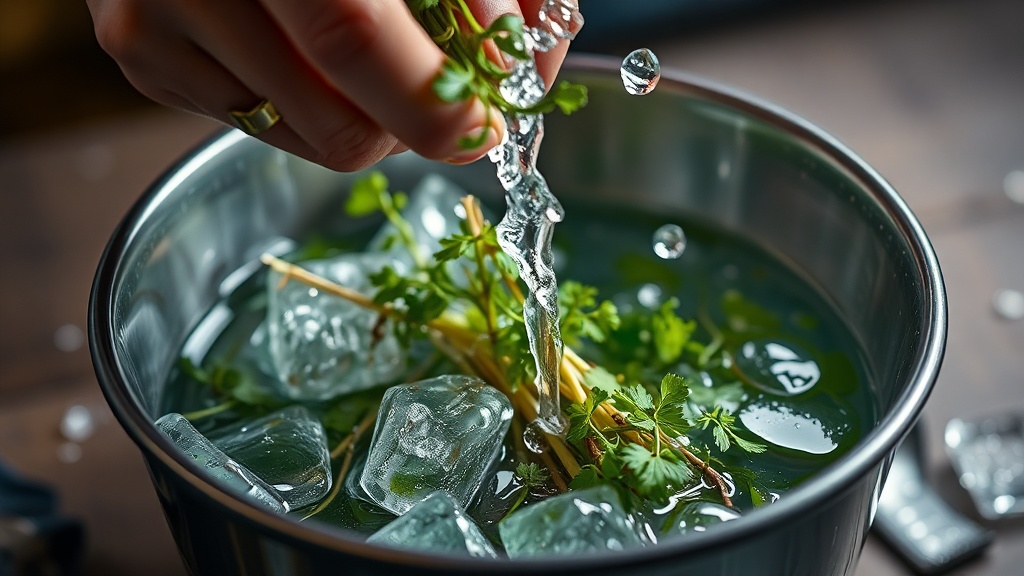
Submerge wilted herbs in a bowl of ice water for 30 minutes to rehydrate them and restore their crispness.
Fresh herbs transform ordinary dishes into something memorable — but that vibrant bunch of cilantro or basil often turns limp and sad before the week's out. This post demonstrates a dead-simple ice water technique that perks up wilted herbs in minutes, saving money and cutting food waste. No fancy equipment needed. Just cold water, ice, and a bowl.
How do you revive wilted herbs with ice water?
Submerge the wilted stems in ice water for 15–30 minutes. The cold shock causes plant cells to rehydrate and firm up, restoring that just-picked texture. Trim about half an inch off the stem ends first — this removes dried-out tissue and lets the herb drink freely.
Here's the thing: temperature matters more than you'd think. Room-temperature water won't deliver the same jolt. Ice-cold water contracts the cell walls temporarily, then as the herb warms to room temperature, those cells hold onto the moisture. It's the same principle florists use with drooping roses.
The process works in three simple steps:
- Trim the stems — Use sharp kitchen shears (the Wüsthof Classic pair handles this cleanly) and cut at a 45-degree angle for maximum water absorption.
- Fill a bowl with ice water — Deep enough to submerge the stems completely. Leaves can stay above the waterline.
- Wait 15–30 minutes — Delicate herbs like basil need less time; woody stems like rosemary can handle longer soaks.
Why do herbs wilt in the refrigerator so quickly?
Refrigerators dehydrate delicate leaves through constant air circulation and low humidity. Herbs are essentially leafy plants that continue respiring after harvest — they breathe, release moisture, and gradually exhaust their stored energy. Most home refrigerators run at 30–40% humidity. Herbs prefer 90% or higher.
That crisper drawer? It's better than the main shelf, but it's still not ideal for tender herbs. The cold air pulls moisture from leaves faster than stems can replace it. Before long, you've got that depressing sight: formerly perky parsley now lying flat against the container like overcooked spinach.
Worth noting: some herbs hate the cold entirely. Basil develops black spots below 50°F — it's a tropical plant, after all. Store basil at room temperature with stems in water, like fresh flowers. For everything else, the ice water trick buys you extra days.
Which herbs respond best to the ice water method?
Soft-stemmed herbs revive most dramatically. Cilantro, parsley, dill, and mint bounce back almost miraculously. Woody herbs like rosemary, thyme, and oregano recover partially — their tougher cell structure doesn't plump quite as readily, but they'll regain enough freshness for cooking.
| Herb Type | Revival Success | Best Storage After Revival |
|---|---|---|
| Cilantro | Excellent | Stems in water, loose bag over top |
| Flat-leaf parsley | Excellent | Damp paper towel in sealed container |
| Basil | Good (no black spots yet) | Room temperature, water glass |
| Mint | Excellent | Stems in water |
| Dill | Good | Damp paper towel, refrigerate |
| Rosemary | Moderate | Loosely wrapped, refrigerate |
| Thyme | Moderate | Loosely wrapped, refrigerate |
The catch? This trick rescues herbs that are wilted but not slimy or moldy. Once decomposition starts — that telltale dark mush at the stems — nothing saves them. Check your herbs every few days and act at the first sign of drooping.
For long-term storage solutions, Serious Eats offers detailed guidance on extending herb life by weeks. If you're serious about reducing kitchen waste, investing in herb keepers like the OXO Greensaver containers makes sense — they regulate humidity and airflow specifically for delicate greens.
Next time that bunch of cilantro goes limp halfway through taco night, don't toss it. A quick ice bath brings it back from the brink. Your guacamole deserves better than sad, wilted herbs — and now you've got the fix.