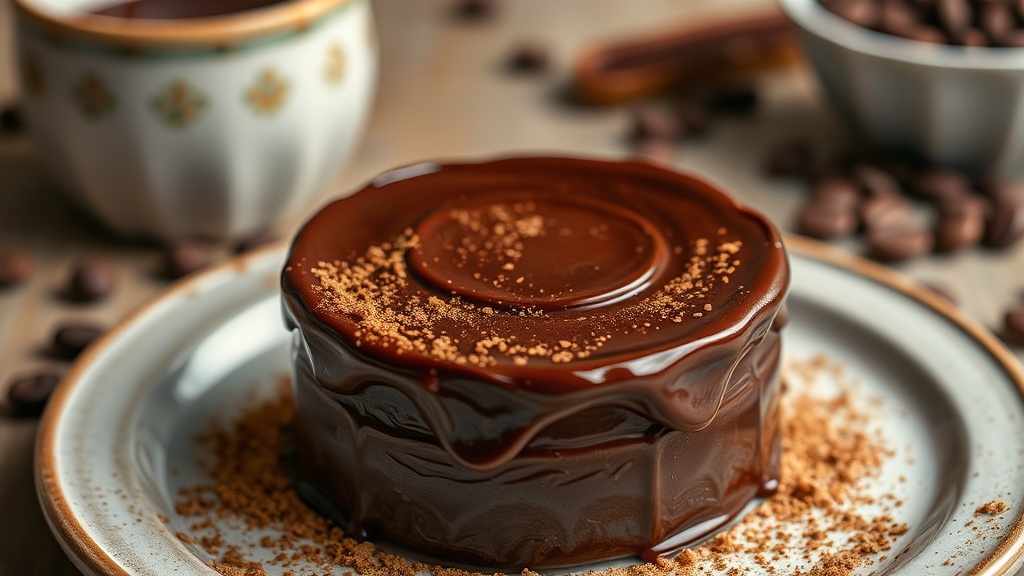
Transforming Leftover Coffee into Rich Chocolate Ganache

Most people assume that leftover coffee is a waste product once it hits room temperature, but it's actually a potent flavoring agent that can deepen the profile of dark chocolate. This post explains how to repurpose cold or lukewarm coffee into a silky chocolate ganache. We'll cover the chemistry of combining liquids with fats, the specific ratios needed for different textures, and how to avoid the dreaded "broken" emulsion.
If you've ever dumped a half-cup of cold brew into the sink, stop. That liquid has enough acidity and bitterness to cut through the heavy sweetness of high-quality chocolate. It's not just about adding flavor; it's about balancing the fat content of your cream with a sharp, aromatic liquid.
Can You Use Any Type of Coffee for Ganache?
You can use almost any coffee-based liquid, but the best results come from strong, unfiltered coffee or concentrated cold brew. While a standard drip coffee works, a highly concentrated brew provides a more intense flavor profile that isn't lost when mixed with heavy cream. If you're using a brand like Stumptown Coffee Roasters, you'll notice a much deeper, more complex bean profile that stands up to the cocoa solids.
The type of coffee you choose dictates the final texture. For example, using a light roast might introduce more acidity, while a dark roast provides a smoky, earthy undertone. It's a fine line to walk. Too much acidity can make the ganache taste "thin," whereas a dark roast makes it feel much more substantial.
Here is a breakdown of how different coffee types affect your chocolate:
| Coffee Type | Flavor Profile | Best Used For |
|---|---|---|
| Dark Roast (French Press) | Smoky, bitter, heavy-bodied | Rich truffle fillings and thick frostings |
| Cold Brew Concentrate | Low acidity, smooth, chocolatey | Glazes and pourable sauces |
| Espresso | Intense, sharp, high caffeine | Small-batch truffles or mocha dips |
| Decaf Drip | Mild, neutral | When you want the flavor without the jitters |
One thing to watch out for is the temperature of the coffee. If you pour ice-cold coffee directly onto melted chocolate, you'll cause the chocolate to seize instantly. This is a common mistake in home kitchens. Always ensure your coffee is at least lukewarm or even slightly warm before introducing it to your chocolate base.
How Do You Prevent Ganache from Breaking?
To prevent ganache from breaking, you must ensure you are creating a stable emulsion by slowly incorporating the liquid into the chocolate. A "broken" ganache looks oily or grainy rather than smooth and glossy. This usually happens because the temperature difference between the coffee and the chocolate was too extreme, or the fat was not properly emulsified.
The process of making a successful ganache is essentially an exercise in patience. You aren't just mixing things; you're forcing two different substances to become one. If you've ever struggled with sourdough starter issues, you know that chemistry in the kitchen is a fickle beast. The same logic applies here.
Follow these steps for a stable emulsion:
- Chop your chocolate finely: Use a high-quality chocolate like Guittard or Valrhona. The smaller the pieces, the faster they melt without needing excessive heat.
- Heat the liquid: Bring your coffee (and any cream or butter you're using) to a simmer. It shouldn't be a rolling boil, just enough to extract the flavor.
- The Pour: Pour the hot liquid over the chocolate in three stages. Wait a minute between each pour to let the chocolate soften.
- Stir from the center: Don't stir wildly. Use a small whisk or spatula and move in small circular motions starting from the center of the bowl.
If the mixture looks oily, you've likely over-heated it or didn't emulsify enough. You can sometimes save it by adding a teaspoon of boiling water or more hot coffee and whisking vigorously to pull the emulsion back together.
What Is the Ideal Ratio for Coffee-Infused Ganache?
The ideal ratio depends entirely on whether you want a pourable glaze or a firm truffle center. For a standard, medium-consistency ganache, a 1:1 ratio of chocolate to liquid is the gold standard. However, if you are using coffee as a "flavor boost" rather than the primary liquid, you'll want to adjust your volumes accordingly.
If you want to make a pourable chocolate sauce for ice cream, use more liquid. If you're making a thick filling for a cake or a truffle, use more chocolate. It's a simple scale. For more technical details on the science of chocolate-making, the Wikipedia page on Ganache provides a deep dive into the historical and chemical compositions of these emulsions.
Here is a quick reference guide for your kitchen:
- For Glazes (Thin/Pourable): 2 parts chocolate to 1 part coffee/cream.
- For Truffles (Firm/Rollable): 3 parts chocolate to 1 part coffee/cream.
- For Frosting (Spreadable): 2 parts chocolate to 1.5 parts coffee/cream.
Note that if you are using a very strong espresso, you can actually use slightly less liquid overall to achieve the same intensity. This keeps the texture thick while the flavor remains punchy.
Making the Coffee Ganache: Step-by-Step
Let's get into the actual execution. I've found that using a bit of heavy cream alongside the coffee creates a much more luxurious mouthfeel than using coffee alone. The fat in the cream acts as a buffer for the acidity of the coffee.
Ingredients You'll Need:
- 8 oz (225g) of high-quality dark chocolate (60% cacao or higher is best)
- 1/2 cup of strong coffee (Cold brew concentrate or fresh espresso)
- 1/4 cup of heavy cream (optional, for extra silkiness)
- A pinch of sea salt (this helps bridge the gap between the bitter coffee and the sweet chocolate)
Instructions:
First, finely chop your chocolate. I recommend using a way to ensure the pieces are uniform so they melt at the same rate. Place the chocolate in a heat-proof glass or metal bowl. Do not use a plastic bowl, as it can retain heat unevenly and may affect the flavor.
Next, prepare your coffee. If you're using a standard drip coffee, make sure it's hot. If you're using cold brew, I'd suggest heating it up in a small saucepan first. This is where people often fail—they try to use lukewarm coffee. It needs to be hot enough to melt the chocolate on contact. Add your heavy cream to the coffee in the saucepan and bring it to a simmer. You'll see tiny bubbles around the edges, but don't let it reach a full boil. A full boil can scorch the delicate flavors of the coffee.
Now, pour the hot coffee/cream mixture over the chopped chocolate. Let it sit undisturbed for exactly two minutes. This allows the heat to penetrate the center of the chocolate pieces without requiring constant stirring. After two minutes, start your stirring. Use a small whisk and move in tiny circles in the middle of the bowl. As the chocolate melts, you can expand your circles. If you see any undissolved bits, keep going. The mixture should eventually look like a single, glossy, dark liquid.
If you want to add a bit of texture, you can fold in some crushed coffee beans at the very end, but keep it simple for your first try. If you find the mixture is too thin, don't panic. Let it sit at room temperature for a few hours. If you're in a rush, you can pop it in the fridge, but be careful not to let it get too hard too fast.
The beauty of this technique is that it turns a "waste" product into something decadent. It's a way to respect the ingredients and use every bit of what you have in your pantry. Just remember: heat the liquid, chop the chocolate, and be patient with the emulsion. You'll end up with something much better than a standard store-bought frosting.
Steps
- 1
Prepare your coffee base
- 2
Heat the coffee and cream
- 3
Incorporate the chocolate
- 4
Emulsify for smoothness