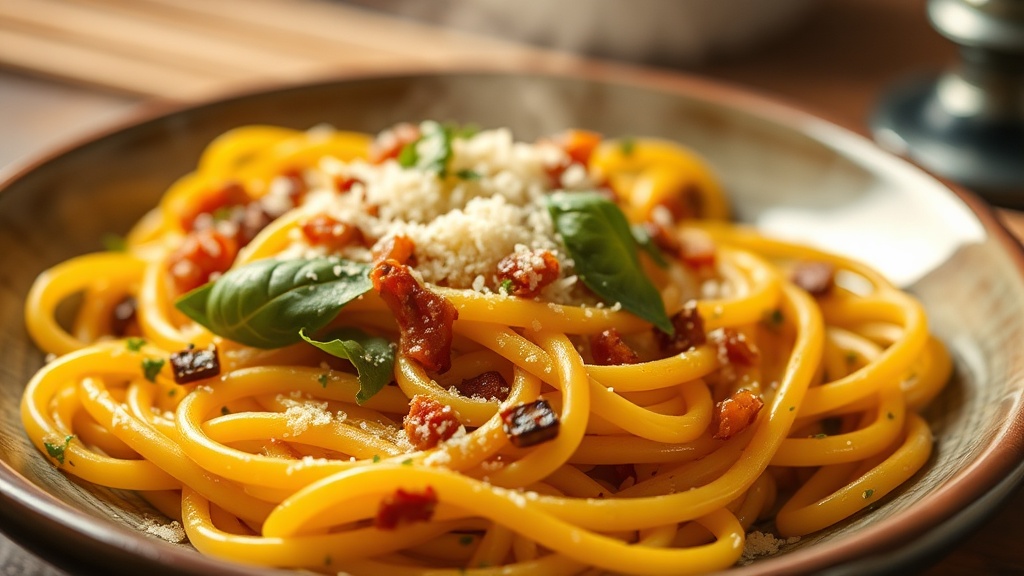
Why Does Restaurant Pasta Taste Better Than Yours? (And How to Fix It Tonight)

Restaurant pasta has a certain magic—silky, glossy, with each strand coated just enough to make you want to lick the plate. The good news? That isn't culinary wizardry or expensive equipment. It's technique. This post breaks down exactly why professional kitchens serve pasta that sings—and the simple shifts that'll get you there without buying a single new gadget.
Why Is My Pasta Water So Important?
Here's what most home cooks miss: your pasta water should taste like the ocean. Not a gentle creek—the actual Mediterranean on a rough day. Professionals salt their cooking water aggressively because pasta absorbs flavor as it cooks. That absorption is your only chance to season the pasta itself from the inside out.
But there's more to this story. The real secret weapon isn't the salt—it's the starchy, cloudy water you pour down the drain. In restaurant kitchens, that liquid gold gets ladled into sauces to create emulsification. The starch acts as a binding agent, marrying fat and water into a cohesive, clingy coating that wraps around each noodle instead of sliding off into a puddle.
Start with about 2 tablespoons of Diamond Crystal kosher salt per liter of water. (If you're using Morton's, cut that back by about 25%—it's denser.) The pasta won't absorb all that salt. What it will do is develop a foundation of flavor that no amount of post-cooking seasoning can replicate. And before you drain? Dip a measuring cup into that murky water and set it aside. You'll use it in minutes.
What Is the Right Way to Finish Pasta in the Sauce?
This is where home cooking diverges dramatically from restaurant technique. Most of us boil pasta until fully cooked, drain it completely, then dump sauce on top. That's backwards—and it explains why your spaghetti sits in a watery pool while restaurant versions wear their sauce like a tailored jacket.
Professional cooks pull pasta 1–2 minutes before the package claims it's done. That chalky, firm bite—al dente in the truest sense—isn't the final destination. It's a checkpoint. The pasta finishes cooking in the sauce, absorbing flavors directly while releasing starch that thickens everything into a cohesive dish.
Here's the practical sequence: Heat your sauce in a wide skillet. Transfer the undercooked pasta directly from pot to pan—no colander involved. Add a splash of that reserved pasta water. Now toss. Aggressively. Use tongs, use a spatula, use whatever gets everything moving. The mechanical action forces sauce into the pasta's porous surface while the starch water creates that glossy emulsion we mentioned earlier.
This finishing process—mantecatura in Italian culinary terms—takes 60–90 seconds. The pasta absorbs sauce. The sauce clings to pasta. What emerges isn't noodles topped with sauce, but a unified dish where every bite carries balanced flavor. That's the restaurant difference, and it requires zero special equipment—just timing and technique.
Does the Type of Pasta Really Matter?
Absolutely—and not in a snobby, only-imported-artisan-pasta way. The shape you choose should be a deliberate decision based on what sauce you're making. This pairing isn't tradition for tradition's sake. It's engineering.
Long, thin strands like spaghetti or linguine work best with oil-based or light cream sauces. The smooth surface doesn't need to capture much—it's about coating. Tubular shapes—penne, rigatoni, paccheri—have interior cavities designed to trap chunky, meat-heavy sauces. The ridges on radiatori and rotini aren't decorative; they grab onto pesto and chunky vegetable ragùs. And those cupped orecchiette? They're literally shaped to cradle small bits of sausage and broccoli.
Deviated nose-to-tail writer and chef J. Kenji López-Alt has extensively tested dried pasta and found that bronze-die extruded varieties—rougher, more porous than their Teflon-die cousins—hold sauce significantly better. The microscopic texture creates friction. That friction means sauce stays where it belongs.
You don't need to spend $12 on imported pasta to get results. Look at the surface. If it looks slightly rough, almost dusty, it'll perform better than glossy supermarket alternatives. Barilla and De Cecco widely available in North America both use bronze dies for many shapes. Read the package. Your sauce will thank you.
Should I Add Oil to My Pasta Water?
No. Full stop. This myth persists because it seems logical—oil prevents sticking, right? But here's what actually happens: oil floats. Pasta sinks. The two don't interact until you drain, at which point that oily film coats your noodles and repels sauce. You've just sabotaged every subsequent step we discussed.
If your pasta sticks together during cooking, you're dealing with one of three issues. First—and most common—you didn't use enough water. Pasta needs room to swim. Crowded noodles steam instead of boil, releasing starch that glues them together. Use at least 4–5 liters for a pound of pasta.
Second, you didn't stir enough. The first 90 seconds are critical. Pasta releases surface starch as it hits hot water. Without agitation, that starch bonds noodles together like papier-mâché. A quick stir immediately, then another 30 seconds later, prevents this entirely.
Third, your heat's too low. A rolling boil keeps pasta moving. Gentle simmering lets gravity do the sticking. Crank the heat. The violent motion of actively boiling water does your stirring work for you.
The test kitchen at Bon Appétit has run controlled experiments on this exact question. Their findings match what Italian nonnas have known for generations: oil in pasta water helps exactly nothing and hurts potentially everything.
Why Does Butter Make Such a Difference?
Most restaurant pasta receives a final enrichment that home cooks skip: fat. Not the olive oil in your sauce—a separate addition at the very end. A tablespoon or two of cold butter, tossed off-heat, creates that restaurant sheen and rounds sharp edges.
This technique—called montare al burro—works because fat carries flavor. It coats the palate, extends the finish of each bite, and creates mouthfeel that water-based sauces can't achieve alone. The emulsification you built with pasta water now has a partner. The result is pasta that tastes complete rather than component-based.
Freshly grated cheese works similarly—but add it off-heat. High temperatures cause the proteins in Parmigiano-Reggiano or Pecorino to seize and clump. Toss your pasta, remove from heat, then scatter cheese while continuing to agitate. The residual warmth melts without stringy disasters.
A final note on cheese: buy the block, not the pre-grated stuff. Those anti-caking agents that keep shreds separate in the bag also prevent proper melting. A Microplane or box grater takes 30 seconds and transforms your results. America's Test Kitchen documented this phenomenon with microscopy—the difference in melting quality is visible and dramatic.
The gap between restaurant pasta and home cooking isn't talent or equipment. It's sequence and attention. Salt your water like you mean it. Undercook your pasta. Finish in the sauce. Reserve that starchy water. Match shapes to sauces. Add fat at the end. These aren't secrets—they're fundamentals that get skipped because package instructions don't mention them. Tonight, try just two of these adjustments. Taste the difference. Then wonder why you ever settled for drained noodles topped with sauce from a separate pot.