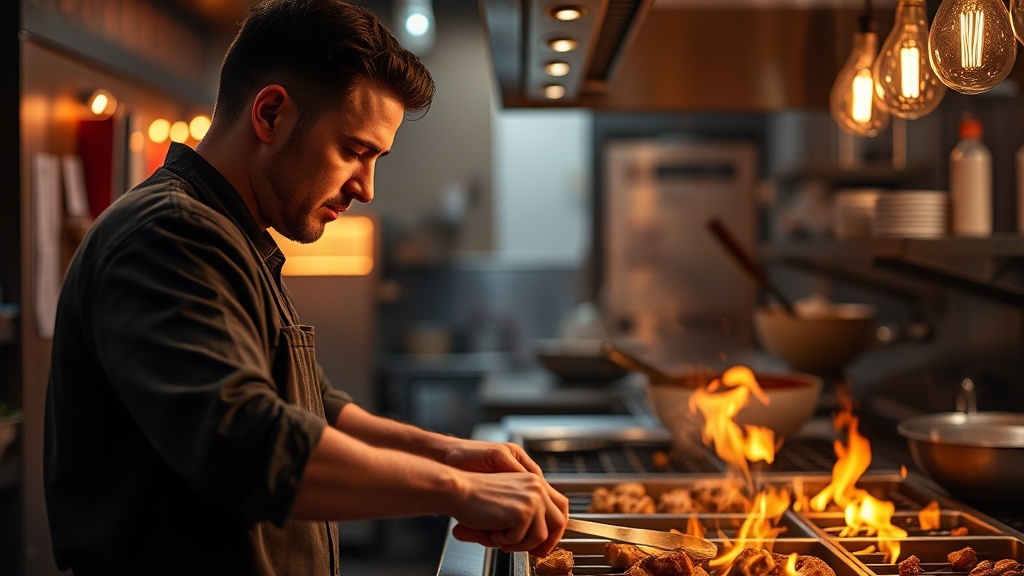
Beyond the Sizzle: Understanding Heat Control

A pan of heavy cast iron sits on a high flame, and a steak is dropped in. The sizzle is deafening, the smoke is rising, and for a split second, everything looks perfect. But then, the exterior turns a deep, charred black while the center remains completely raw. This isn't a failure of the meat; it's a failure of heat management. This guide explores the mechanics of temperature control, the difference between conduction and convection, and how to master your stovetop and oven to avoid common cooking disasters.
Mastering heat is the difference between a mediocre meal and a professional-grade dish. Most home cooks rely heavily on visual cues—looking for a bubble or a color change—but true control comes from understanding how energy moves from your burner to your food. We'll look at how to manage thermal mass, the nuances of different pan materials, and why your thermometer is your best friend.
Why Does My Food Burn on the Outside but Stay Raw Inside?
Food burns on the outside while remaining raw inside when the surface temperature is significantly higher than the internal temperature required for cooking. This usually happens because the heat source is too intense for the density of the ingredient. If you're searing a thick salmon fillet on high heat, the exterior reaches a high temperature quickly, but the heat hasn't had enough time to penetrate the center. This is a classic case of high thermal conductivity on the surface without enough time for steady heat transfer to the core.
To prevent this, you need to understand the relationship between heat intensity and time. A high-heat sear is great for building a crust, but you must transition to a lower heat or move the pan to the oven to finish the cooking process. If you're working with something dense, like a thick pork loin, a high flame will almost always result in a burnt exterior and a cold center.
Think about the physics of your pan. A heavy-duty pan like a Lodge Cast Iron skillet holds a massive amount of thermal energy. Once that pan is hot, it stays hot. If you drop a cold piece of meat into a scorching iron pan, the temperature drops momentarily, but then it climbs back up rapidly, often overshooting the ideal temperature. This creates a "thermal shock" that can scorously the surface before the middle is even warm.
Here are a few common culprits for uneven cooking:
- Too much surface area: Using a small pan for a large amount of food crowds the pan and drops the temperature too low.
- Incorrect pan material: Using thin aluminum for high-heat searing can lead to hot spots.
- Ignoring the "Carry-over": Forgetting that food continues to cook after you remove it from the heat.
The catch is that most people think "more heat equals faster cooking," but in reality, it often just equals "more burnt food." You want to find the sweet spot where the heat is high enough to react with the food but low enough to allow heat to travel through it.
How Do I Control Heat When Using Different Cookware?
You control heat by matching the thermal properties of your cookware to the specific needs of your recipe. Different materials—such as copper, stainless steel, cast iron, and non-stick—react to temperature changes at different speeds and intensities. To master heat, you must treat each pan as a unique tool with its own set of rules.
I've spent way too much time watching a stainless steel pan smoke because I didn't realize how quickly it retains heat. Here is a breakdown of how different materials behave under heat:
| Cookware Material | Heat Response | Best Use Case |
|---|---|---|
| Cast Iron | Slow to heat, stays hot a long time | Searing steaks, baking cornbread |
| Stainless Steel | Medium response, can have hot spots | Making pan sauces, sautéing vegetables |
| Copper | Extremely fast and responsive | Making delicate sauces or melting chocolate |
| Non-Stick | Moderate, but sensitive to high heat | Eggs, delicate fish, low-fat cooking |
If you are using a stainless steel pan, you'll notice it doesn't distribute heat as evenly as cast iron. You might see a ring of heat right in the center where the burner touches the metal. This is why many chefs use a "heat spreader" or simply move the pan around to ensure the entire surface is utilized.
When working with non-stick, be careful. High heat can actually damage the coating and, more importantly, ruin the texture of your food. If you're making an omelet, you don't need a screaming hot pan; you need a gentle, consistent warmth. Using too much heat on non-stick can also lead to the release of fumes, so it's best kept for medium or low heat tasks.
What Is the Best Way to Use a Meat Thermometer?
The best way to use a thermometer is to insert the probe into the thickest part of the meat, avoiding any bone or fat that might give a false reading. A thermometer is not just a suggestion; it is the only way to ensure food safety and precision. Relying on "feel" or "the finger test" is a common way to end up with a dry, overcooked dinner.
Don't just stick the probe in the side of the meat. If you hit a bone, the reading will be much higher than the actual temperature of the muscle, and you'll pull your meat off the heat far too early. If you hit a pocket of fat, the reading might be too low. You want to aim for the center of the thickest part of the protein.
Here's a quick guide for internal temperature targets (based on USDA guidelines):
- Poultry (Chicken/Turkey): 165°F (74°C). Always ensure the juices run clear and the thickest part hits this mark.
- Ground Meats: 160°F (71°C). This is vital for preventing foodborne illness in burgers.
- Beef/Steak (Medium-Rare): 130°F to 135°F (54°C to 57°C) before resting.
- Pork: 145°F (63°C) with a three-minute rest.
One thing people often miss is the "carry-over" cooking. If you pull a steak off the grill when it hits 130°F, it will likely reach 135°F or 140°F by the time you sit down to eat. This is because the heat from the exterior is still migrating toward the center. If you want a perfect medium-rare, pull it off the heat a few degrees early.
It’s also worth noting that different types of thermometers have different accuracies. An instant-read digital thermometer is far more reliable for quick checks, while a probe thermometer is better if you're slow-cooking or roasting something for a long time.
If you're already looking to upgrade your cooking skills, you might want to look into the ingredients in your pantry that can actually help with heat—like oils with high smoke points. Using an extra virgin olive oil for a high-heat sear is a mistake; the oil will burn and turn bitter before the meat even gets a crust. Instead, use an oil like avocado oil or grapeseed oil, which can handle the intense heat without breaking down.
Precision in the kitchen is about more than just following a recipe. It’s about understanding the physics of your tools. Whether you're managing the thermal mass of a cast iron skillet or the rapid response of a copper pan, the goal is the same: consistent, controlled energy. Once you stop fearing the flame and start respecting the temperature, your cooking will transform.