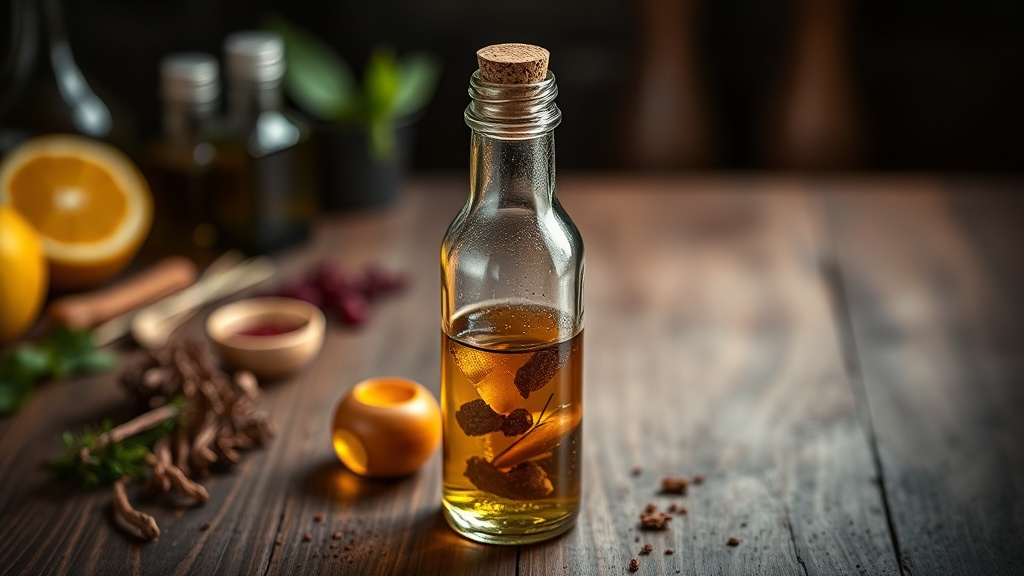
Creating Layers of Flavor with Homemade Infused Oils

In this guide, you'll learn how to infuse oils with various aromatics, the safety protocols required to prevent botulism, and how to store your finished products. We'll cover the difference between cold infusion and heat infusion methods to ensure you get the exact flavor profile you want for your cooking.
What Is the Safest Way to Make Infused Oil?
The safest way to make infused oil at home is through the cold infusion method or by using a controlled heat method that stays below 150°F (65°C). If you're working with fresh ingredients like garlic or herbs, you must be extremely careful about the risk of Clostridium botulinum. This bacterium thrives in low-oxygen, low-acid environments—exactly what a jar of oil looks like.
To keep things safe, I recommend using dried aromatics whenever possible. Dried ingredients have much lower moisture content, which significantly reduces the risk of bacterial growth. If you insist on using fresh ingredients, you should either use them immediately or store the oil in the refrigerator and consume it within a few days. For more detailed information on food safety standards, you can check the FDA website.
Here is a quick breakdown of the two primary methods:
| Method | Best For | Time Required | Difficulty |
|---|---|---|---|
| Cold Infusion | Delicate herbs, citrus peels | 1–4 weeks | Easy |
| Heat Infusion | Hard spices, dried chilies, garlic | 2–4 hours | Moderate |
Which Oils Work Best for Infusions?
The best oils for infusion are those with a neutral flavor profile and a high smoke point, such as grapeseed, canola, or light olive oil. While extra virgin olive oil is delicious, its strong flavor can sometimes mask the subtle notes of the ingredients you're adding. If you're making a chili oil, a neutral oil like peanut or sunflower oil works wonders.
Don't just grab any oil from the pantry without thinking. A high-quality oil provides a clean canvas for your flavors. For instance, if you're using high-end ingredients, you might want to use a premium extra virgin olive oil, but remember that heat will degrade its delicate polyphenols. It's a trade-off between flavor depth and stability.
I often find that people overlook the importance of the base oil's quality. A cheap, highly processed oil might not ruin the flavor, but it won't add much to the texture either. Think about what you're pairing it with—a rich, nutty oil for a salad dressing or a light, clean oil for a stir-fry.
Choosing Your Aromatics
Your choice of aromatics dictates the entire personality of the oil. You can go several directions with this:
- Herbal: Rosemary, thyme, or basil (use dried for safety).
- Spicy: Dried red pepper flakes, whole dried chilies, or peppercorns.
- Citrus: Dehydrated lemon or orange zest (avoid the white pith, as it's bitter).
- Alliums: Dried garlic slices or shallots.
If you're interested in how different spices interact, you might enjoy reading about regional spice blends. It helps to understand the foundational flavors before you start experimenting with infusions.
How Do I Make Infused Oil at Home?
You can make infused oil by either steeping ingredients in room-temperature oil over several weeks or by gently warming the oil and ingredients together on a stove. The heat method is much faster and allows for more immediate results, but it requires constant supervision to ensure the oil doesn't reach a smoking point.
Follow these steps for a successful heat infusion:
- Prepare your ingredients: Ensure all dried spices or herbs are crushed or chopped to increase surface area.
- Warm the oil: Place your oil and ingredients in a small saucepan over very low heat.
- Monitor the temperature: Use a digital thermometer to keep the oil between 120°F and 140°F. If it hits 150°F, you're pushing it too far.
- Steep: Let the mixture sit on the low heat for about 30 to 60 minutes.
- Strain: Use a fine-mesh sieve or cheesecloth to remove all solids.
- Cool and Store: Pour the oil into a clean, dry glass jar and let it cool completely.
One thing to keep in mind—and this is a big one—is the cleanliness of your equipment. Any leftover moisture or food particles from previous cooking sessions can introduce bacteria into your new batch of oil. Always use sterilized glass jars for storage.
If you're working with heat, you're essentially controlling the speed of flavor extraction. A longer, lower-temperature soak yields a more subtle, integrated flavor. A shorter, higher-temperature soak yields a more intense, aggressive flavor. It's all about the balance.
When you're testing the temperature, don't rely on your eyes alone. You can't "see" the temperature of oil effectively. A digital thermometer is a non-negotiable tool here. It's much better to be too low than too high. If you burn the herbs, the oil will taste bitter and ruined—and that's a waste of good oil.
I've had many beginners try to use fresh garlic in a warm oil bath. While it smells incredible, it's a gamble with food safety if you don't consume it immediately. For a safer, more reliable experience, stick to the dried versions. The flavor is still fantastic, and you won't have to worry about the heavy lifting of safety protocols.
Once you've strained your oil, it's a good idea to store it in a cool, dark place. Light and heat are the enemies of infused oils. If you're using a clear bottle, keep it in the pantry away from the stove. If you're using a dark bottle, you're already ahead of the curve.
The final step is deciding how to use it. An infused oil isn't just a cooking ingredient; it's a finishing touch. Drizzle a chili oil over a soft-boiled egg, or use a lemon-infused oil to brighten up a piece of grilled fish. It's a simple way to add a layer of complexity to even the most basic dishes.
If you find yourself gravitating toward more complex pantry additions, you might want to look into hidden gems in your pantry to see what else you can play with. There's so much potential in these small-batch creations.
Remember, the goal is to experiment. Don't be afraid to fail. If a batch tastes a bit off or the color isn't quite right, try a different ratio next time. Cooking is a continuous process of refinement. Each batch is a chance to learn something new about how flavors interact with fat.
Steps
- 1
Select Your Base Oil
- 2
Prepare Your Aromatics
- 3
The Gentle Heat Method
- 4
Cooling and Storing