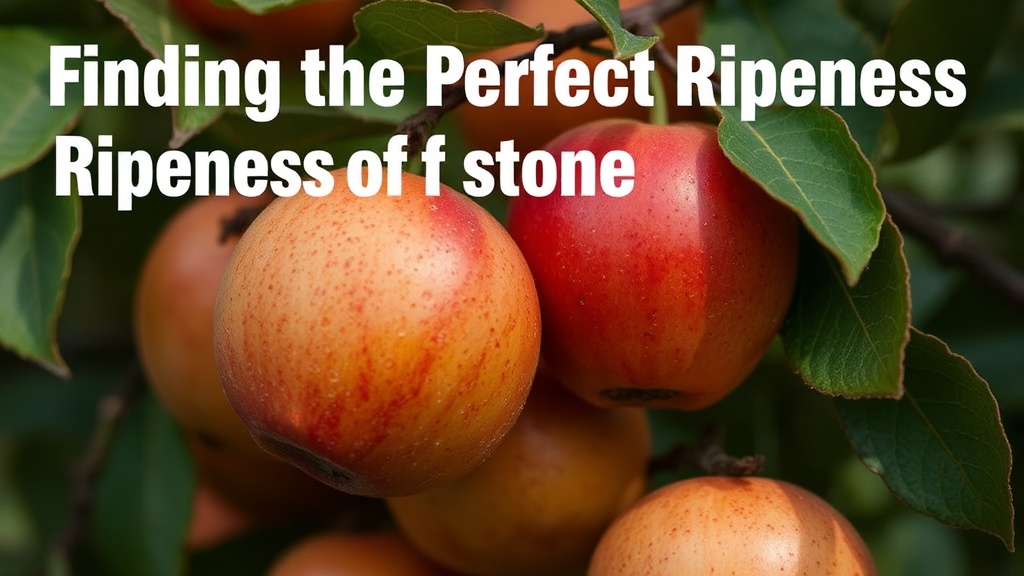
Finding the Perfect Ripeness of Stone Fruit

In this guide, you'll learn exactly how to identify peak ripeness in stone fruits like peaches, nectarines, plums, and cherries using sight, touch, and smell. Knowing the difference between a fruit that's just "ripe" and one that's actually at its peak flavor will prevent you from wasting money on hard, flavorless produce or ending up with mushy fruit that's past its prime. We'll look at specific indicators for different varieties and how to handle them once they hit that sweet spot.
How Do You Tell if a Peach is Ripe?
A peach is ripe when it yields slightly to gentle pressure near the stem and gives off a sweet, floral aroma. If it feels like a rock, it's not ready. If it feels like a sponge, it's gone too far.
The first thing you should do is look at the color. While color isn't always a perfect indicator—especially with certain varieties—a deep, even color often signals maturity. For example, a peach should have a rich yellow or orange base rather than a pale, greenish tint. The "blush" (that reddish-pink part) is often more about sun exposure than actual sugar content, so don't rely on it exclusively.
Next, use your hand. Don't squeeze the fruit with your fingertips—that's how you get bruises—but rather give it a very light, gentle squeeze with your whole palm. It should have a slight "give." If it feels firm throughout, it needs more time on the counter. If it feels soft or hollow, it's likely overripe and might be fermented or bruised inside.
Don't forget the scent. A ripe peach should smell like a peach. If there's no scent at all, it's likely underripe. If it smells slightly fermented or like vinegar, it's past its prime. It's a subtle distinction, but your nose knows.
One thing to watch out for is the skin texture. Some peaches are "fuzzy" and others are "smooth" (nectarines), but both should have skin that looks taut and healthy. If the skin looks wrinkled or shriveled, the fruit has lost its moisture and is starting to dehydrate.
How Can You Know if Nectarines are Ready to Eat?
Nectarines are ready to eat when the skin is smooth, shiny, and the flesh feels slightly soft when pressed near the stem. Because they lack the fuzz of a peach, they can sometimes look more "perfect" than they actually are, which can be a bit deceptive.
Nectarines are essentially a variety of peach without the fuzz, so the rules are almost identical. However, because the skin is smoother, it's even easier to miss bruising. I always recommend checking the weight. A ripe nectarine should feel heavy for its size, which indicates high water and sugar content. If it feels light or "airy," it's likely a bit dehydrated.
Check the stem area specifically. The stem indentation is a great place to test for ripeness. A ripe nectarine will feel slightly recessed and soft in that area. If the area around the stem is hard and tight, it's still in the growing stage and won't have that juicy texture you want in a summer dessert.
| Fruit Type | Color Indicator | Touch Test | Scent Profile |
|---|---|---|---|
| Peach | Deep yellow/orange base | Softens near the stem | Sweet, floral aroma |
| Nectarine | Bright, shiny skin | Slight give in flesh | Mild, sweet scent |
| Plum | Deep purple or red | Plump and firm | Tangy and fruity |
| Cherry | Deep, uniform color | Firm but bouncy | Strong, distinct aroma |
What is the Best Way to Ripen Plums at Home?
The best way to ripen plums is to leave them at room temperature on a flat surface until they feel slightly soft to the touch. Avoid putting them in the refrigerator while they are still hard, as cold temperatures can kill the flavor development.
If you've bought plums that are still quite firm, keep them on your kitchen counter in a single layer. Don't stack them! Stacking creates pressure points that lead to bruising. You can even place them in a paper bag with a banana or an apple to speed up the process. These fruits release ethylene gas, which is a natural ripening agent. It's a simple trick, but it works wonders.
Once the plums have reached your desired level of ripeness, move them to the fridge. This will stall the process and keep them at that peak stage for a few more days. If you're planning to use them for a tart or a crumble, you might actually want them slightly firmer so they hold their shape under heat.
On the flip side, if you're making a fresh fruit salad, you'll want them at maximum ripeness. At that stage, the juice is much more intense, but the window of time where they are "perfect" is much shorter. Keep a close eye on them—once they start to look a bit "squishy," they're heading toward a compost bin very quickly.
For more technical details on how fruit maturation works, you can check out the Wikipedia page on stone fruits to understand the botanical side of things. Understanding the biology can actually help you predict how they'll behave in your kitchen.
How Do You Identify Ripe Cherries?
Ripe cherries are characterized by a deep, uniform color (usually dark red or even near-black) and a firm, plump texture. Unlike peaches, you shouldn't look for "softness" in a cherry; you're looking for "plumpness."
When shopping for cherries, look for a high-gloss shine. A dull or matte appearance can be a sign that the cherries are old or have been sitting in storage too long. You want them to look vibrant. The stems are also a huge giveaway. Fresh, green stems are a great sign of recent harvesting. If the stems are brown, dry, or brittle, the cherries are likely older and might be losing their juice content.
The taste profile of a ripe cherry is a balance of sweet and slightly acidic. If you're buying them for baking, a slightly more acidic, firmer cherry is often better for maintaining structure. However, for eating raw, you want that deep sweetness.
One thing to note: cherries are much more delicate than other stone fruits. They don't handle being squeezed at all. If you're picking them out of a bulk bin, be incredibly gentle. Even a little bit of pressure can cause the skin to split, which leads to rapid decay.
I've found that if you're looking for high-quality produce, checking the USDA website for seasonal availability and quality standards can be a great way to ensure you're buying at the right time of year. Seasonal fruit is almost always more flavorful than fruit shipped from halfway across the world.
If you're looking to use these fruits in more complex recipes, understanding how they react to heat is just as important as knowing when they're ripe. If you're interested in how temperature affects your cooking, check out my post on understanding heat control. It'll help you manage the transition from raw fruit to a cooked dessert without losing that perfect texture.
A quick tip for storage: once you've found that perfect ripe fruit, keep it in the refrigerator in a breathable container. This prevents moisture buildup, which is the enemy of stone fruit. If you see any signs of mold or even a single bruised fruit, remove it immediately. One bad apple (or in this case, one bad peach) really does spoil the bunch. The ethylene gas released by a decaying fruit will quickly affect everything else in the container.
When you're working with stone fruit, remember that you're dealing with a living, breathing product. It's constantly changing. Whether you're prepping for a summer pie or just looking for a healthy snack, pay attention to the small details—the smell, the weight, and the subtle give of the skin. That's where the real flavor lives.
Steps
- 1
The Gentle Squeeze Test
- 2
The Scent Check
- 3
Color and Skin Inspection
- 4
Checking the Stem End